Green Finance
Understanding Green Credit: A Practical Guide for SMEs
Key takeaways
- Green credit is linked to eligible environmental activities, not simply to a company's sustainability ambitions.
- A credible application connects the proposed expenditure, environmental evidence and repayment capacity.
- Eligibility, pricing and approval depend on the lender, jurisdiction and financing product.
What is green credit?
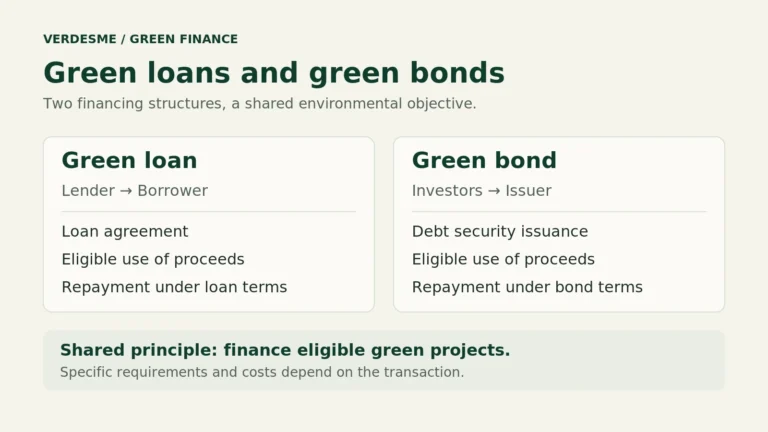
Green credit is a broad term for financing that supports environmental objectives. A green loan is a more specific financing instrument: under the Green Loan Principles, the funds are allocated to qualifying green projects. The Loan Market Association’s sustainable lending resources explain the distinction between green loans and sustainability-linked loans, which instead connect financing characteristics to sustainability performance targets.
For a small or medium-sized enterprise (SME), the practical starting point is not a green label. It is a clear explanation of what the business wants to invest in, why that investment matters environmentally, and how it will be financed and repaid.
What kinds of projects may qualify?
The following examples are illustrative rather than a list of automatically eligible activities. The actual requirements must be checked against the relevant framework and product terms.
| Potential investment | Evidence worth preparing |
|---|---|
| Energy-efficient machinery | Existing energy use, equipment specifications and expected savings |
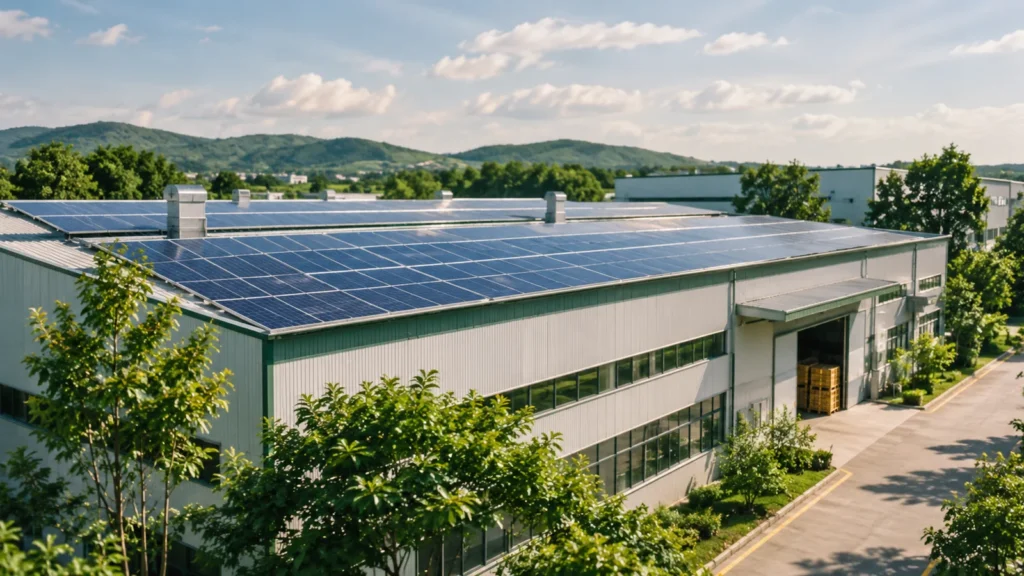
| Rooftop solar | System design, generation estimate and investment budget |
| Water-efficient production | Current water use, proposed technology and expected reduction |
| Waste reduction or recovery | Waste records, material flows and proposed treatment process |
The IFC Sustainable MSME Finance Reference Guide is a useful starting point for understanding how sustainable financing approaches can be adapted to smaller enterprises. It is guidance for financial institutions, not an individual bank’s approval policy.
What lenders may want to understand
An SME should be prepared to discuss three connected questions.
The project
Describe the investment, its location, estimated cost, implementation schedule and suppliers. Be specific about which expenses the financing will cover.
The environmental benefit
Set a baseline before estimating an improvement. For example, a manufacturer replacing a motor could compare expected electricity consumption under comparable production conditions. Distinguish engineering estimates from measured results after installation.
Repayment capacity
Prepare financial records, existing borrowing information and a realistic cash-flow forecast. Even a project with a convincing environmental benefit may not meet a lender’s credit requirements.
A simple illustrative example
Consider a workshop that plans to replace older equipment costing USD 20,000. Assume the upgrade reduces electricity expenditure by USD 4,000 per year before maintenance and financing costs. The simple payback period is five years (20,000 divided by 4,000).
This hypothetical calculation is not a return forecast or a credit assessment. Actual results will depend on operating hours, tariffs, equipment performance, financing terms and maintenance. The business should keep the supporting assumptions and test a less favourable scenario.
How to get started
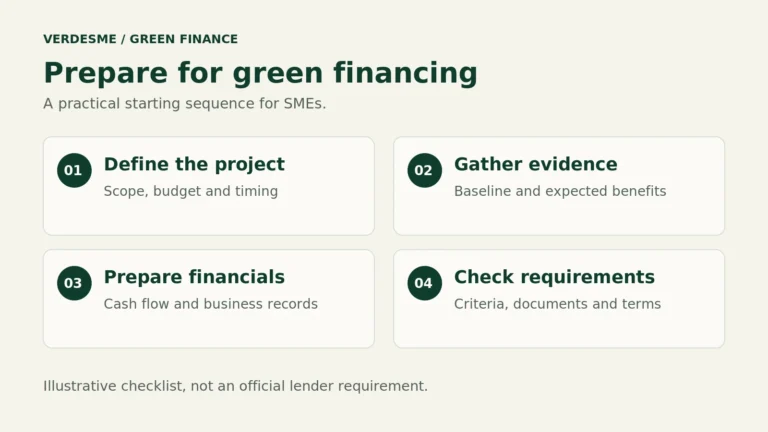
Prepare a short project brief, identify applicable environmental requirements and ask prospective lenders about eligible expenses, documentation, interest rates, fees, reporting and collateral. Compare the total financing cost rather than assuming that a green loan will be cheaper.
For a step-by-step preparation process, see the VerdeSME guide How to Prepare Your SME for Green Financing. The distinction between loans and bonds is explained in Green Loans vs. Green Bonds: What SMEs Should Know.
Sources & further reading
VerdeSME Toolkit
Project Screening
Project Screening is in development. The preview explains its current status.
View the preview